NBT, Engineering Director
Fractional CTO across NBT's venture portfolio, combining product delivery, team building, and shared platforms.
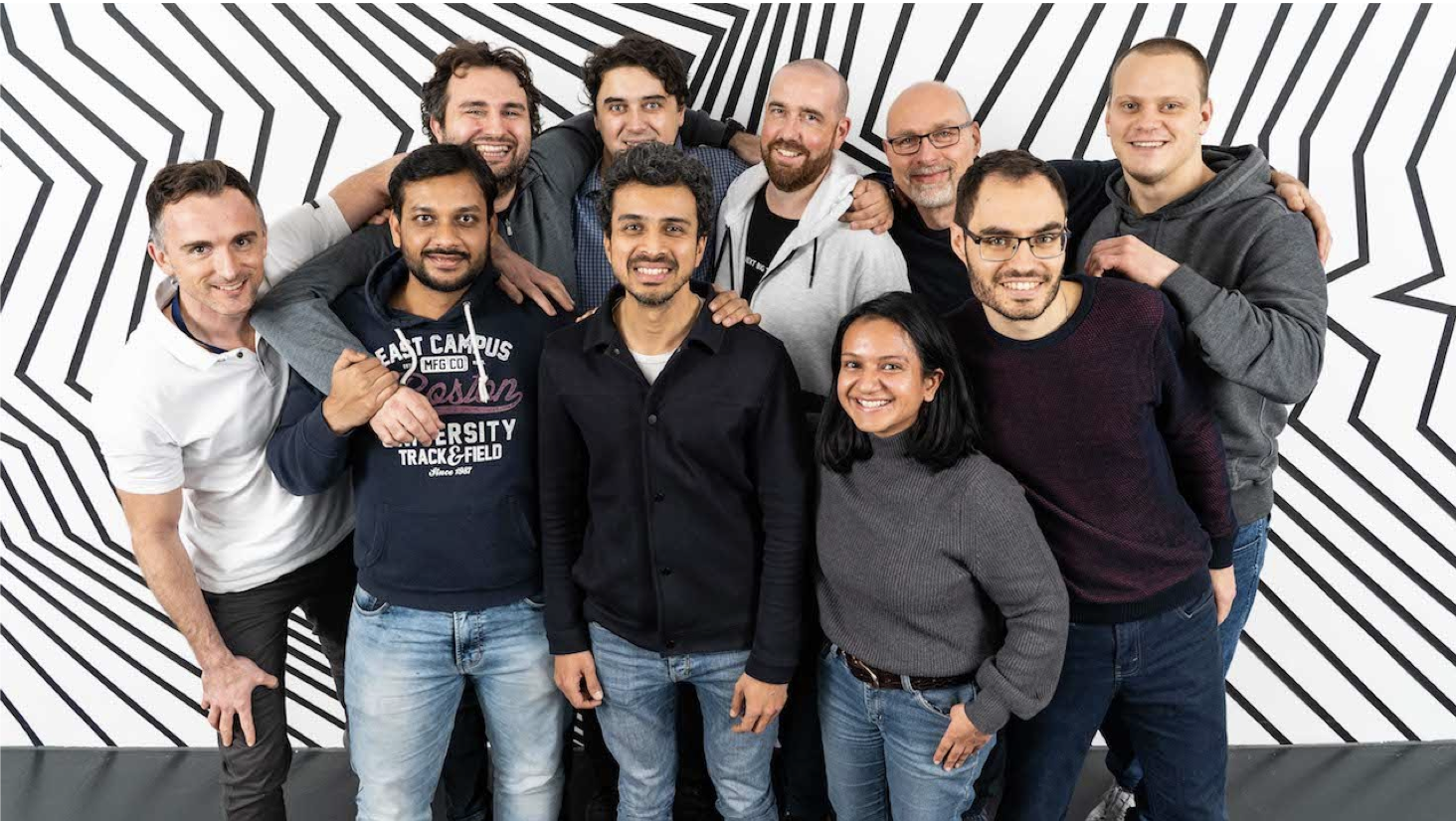
I had just finished an improv show when I got talking to someone from the audience. I told her how much I enjoyed working with startups in Berlin. She mentioned about this newly established "venture builder" called Next Big Thing AG , and recommended me to apply. I walked into their office, an open space with exposed bricks and raw pipes, desks cluttered with scattered notebooks, and people deeply focused behind their sleek laptops. In the far corner, a small electronics "factory" that hummed with a quiet energy of creation - circuit boards, soldering irons, and the chief prototype officer tinkering away under the soft glow of industrial lights. I felt instantly that I would thrive here. I spoke with the CTO and the founders of Metr , one of NBT's first ventures. A few weeks later, I joined Metr to build its software stack from scratch. I wrote the backend in Django, built a small frontend with RxJS, and created a Python-based M-Bus layer for its smart-housing gateway After Metr went live with its first pilot customer, the CTO asked me to join NBT itself. He told me, “You have full autonomy to build the software team you need to support ten startups in the coming years.” It was an offer I could not refuse. Over the next five years, I built a team of more than ten engineers and helped take six startups live. The work often took me far beyond my desk. I tested connectivity and APIs in the field where sensors were installed, worked with NB-IoT devices, serial buses, and low-level sockets, and joined internal hackathons to test ideas quickly. I spent a lot of time listening to founders explain their problems. Each venture was different, and I had the freedom to try new tools and ways of working. When I noticed our IoT teams rebuilding the same basic parts, I created the Standard IoT Platform as a shared starting point. (You can read more about that below.) Still brings a smile on my face to think about how it all began: a chance conversation after an improv show, followed by years of building companies, products, and a team from the ground up.
Standard IoT Platform - Shared infrastructure for NBT ventures
A reusable AWS platform that took new IoT ventures from infrastructure setup to product development in a few days.
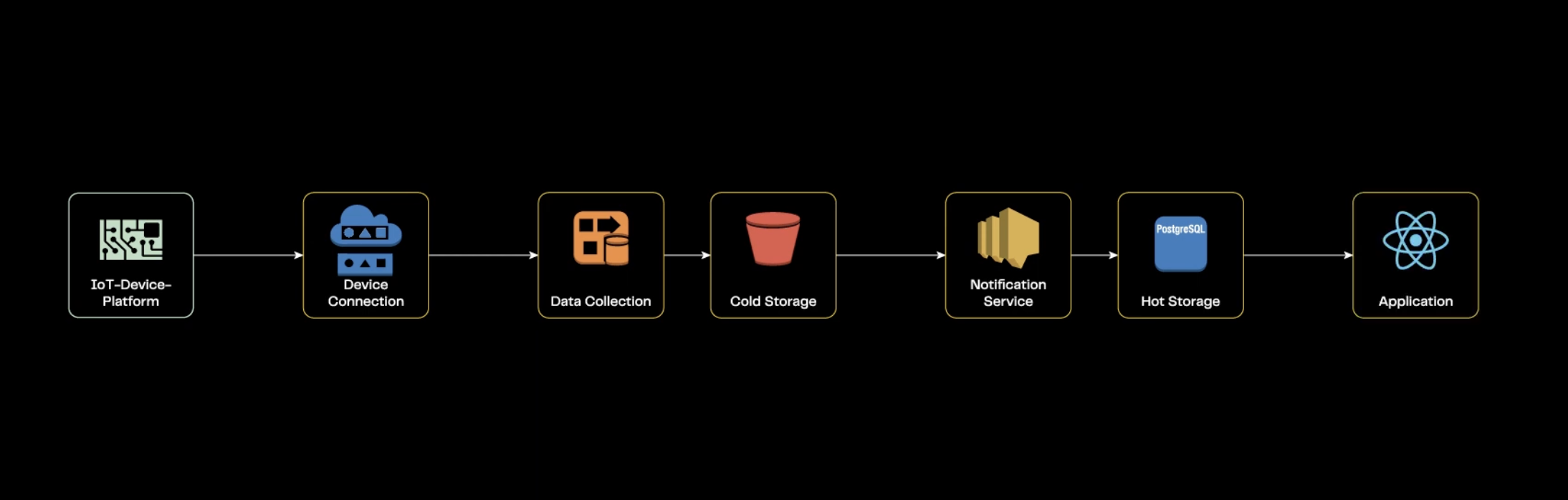
If you build products in Internet of Things (IoT), you know that the business value is in the data that is sent by the devices. It is important to ensure that the data is properly collected, stored, filtered, sliced and diced in standardized ways before sending it to a business application for further domain-specific analysis. Rather than reinvent the wheel for every company, I built the Standard IoT Platform as a reusable base we could set up for a new product within a few days. A reusable installer and Terraform deployed the infrastructure on AWS. Prometheus, our device platform, installed the firmware and issued encryption keys. Devices connected over NB-IoT to AWS IoT Core, where a device shadow kept a virtual twin available to make a device’s state available to apps and other services. From there, a Kinesis Data Firehose and Lambda functions filtered and distributed each reading. Long-term data went into S3 Glacier, recent data into a RDS, and a notification service passed events to analytics, payments, AI, alarms, reports, and other product features. Amazon Cognito handled user access, while queues and workers took care of slower jobs. The result was a secure, scalable platform that could collect data from thousands of sensors and handle thousands of application queries. More importantly, startup teams could start on the part that made their product special instead of rebuilding the plumbing.
NBT AG · 2018–2022 · Platform architect and lead developer. I designed the shared architecture, built its reusable infrastructure and services, and helped venture teams adopt it.
Blockchain Rowers at ETHBerlin
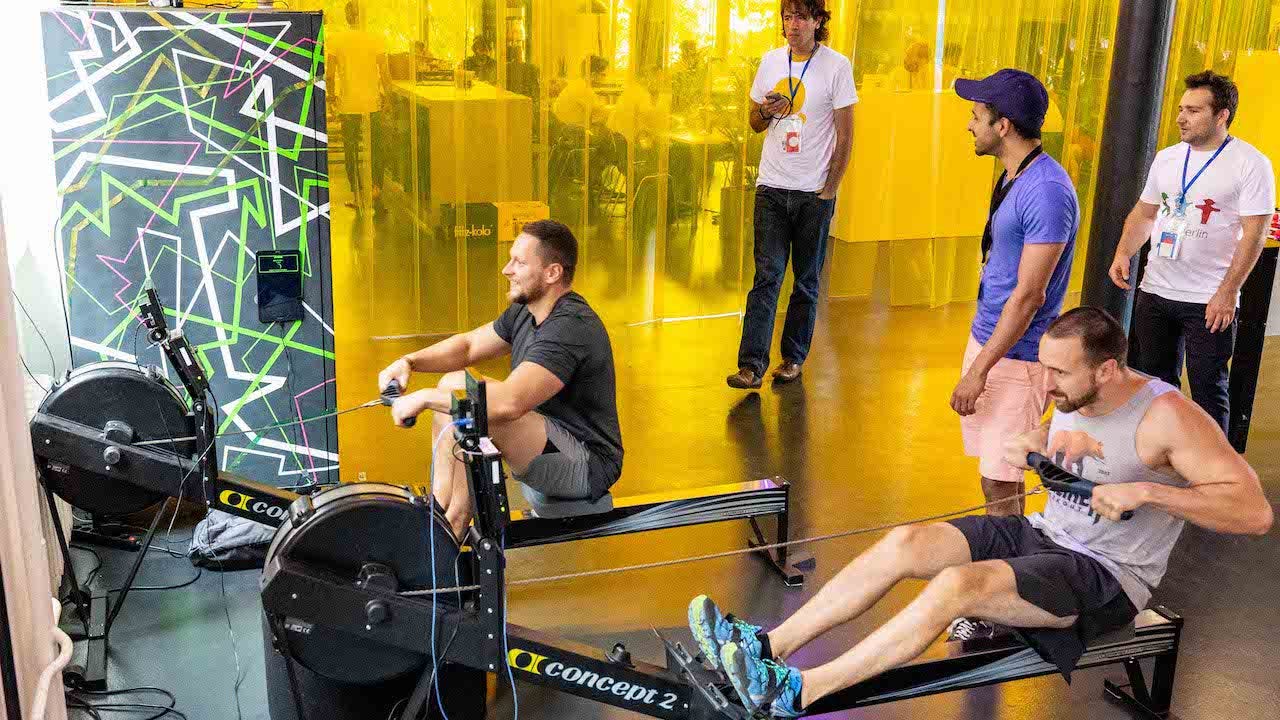
Players earned xDAI by beating a timed rowing challenge, then spent their reward at a blockchain-connected vending machine.
Back in 2018 and 2019, blockchain was at peak hype. Everyone seemed to be searching for that breakthrough app ordinary people would want to use. The user experience was still awkward - they needed a wallet, cryptocurrency, and gas before they could do much. But that didn't stop us from exploring odd ideas and having fun as hackers. At NBT, one idea kept coming up: could we gamify certain experiences like turning physical activity into a reward paid through blockchain? We had already played with snowboarding and "coffee tokens," collected from a connected coffee machine- that story deserves a separate post someday. Then, the prestigious Ethereum hackathon ETHBerlin Zwei came around, and NBT wanted to showcase their blockchain prowess. This time we teamed up with a fitness group called Baerliner Berlin, and replaced the tiny coffee machine with a vending machine - big, bulky, and unmistakably a relic of the '90s. Standing between a few rowing machines, and the huge vending machine, and all the blockchain chatter, we discussed - Would people exercise more if they could literally create money with the effort? Not points. Not badges. Real tokens earned by rowing 100m in, say, 18 seconds, verified by the blockchain, and spendable at the very vending machine. The idea excited everyone. Hardware engineers wired rowing machines that had never been meant to communicate. Embedded engineers pulled out the race results. Software engineers built the cloud infrastructure on gETH nodes. Raspberry Pis and Python bridged the physical and digital worlds. A small AWS Lambda service created an xDAI reward link for each winner. Players could scan a QR code, claim the reward in a browser-based burner wallet, and send it to the vending machine. Another Raspberry Pi watched for the payment and spoke MDB with the machine, telling it to release the prize. No wallet setup. No cryptocurrency to buy. No gas to find before playing. ETHBerlin Zwei drew hundreds of hackers and several well-known names from the blockchain world, including Vitalik Buterin. Our setup was irresistible: three rowing machines, a vending machine, a bunch of colorful wires, and the promise of Ethereum for a DeFi future. Someone stepped up, pulled 100 meters against the clock, and beat the target of 18 seconds, all while we boisterously cheered them. Then they scanned the reward, walked to the vending machine, and spent it. When the prize dropped, what was just a fun idea suddenly felt exciting and tangible. Row. Earn. Spend. The loop was simple, almost silly, but it worked. People stopped to watch, then lined up to try. More than 150 of them took a turn. That old vending machine was no longer a relic. It had become the final link between effort and reward. For a few minutes at a time, blockchain stopped being hype and became something people could see, use, and laugh about.
NBT AG · 2019 · Hackathon team member